
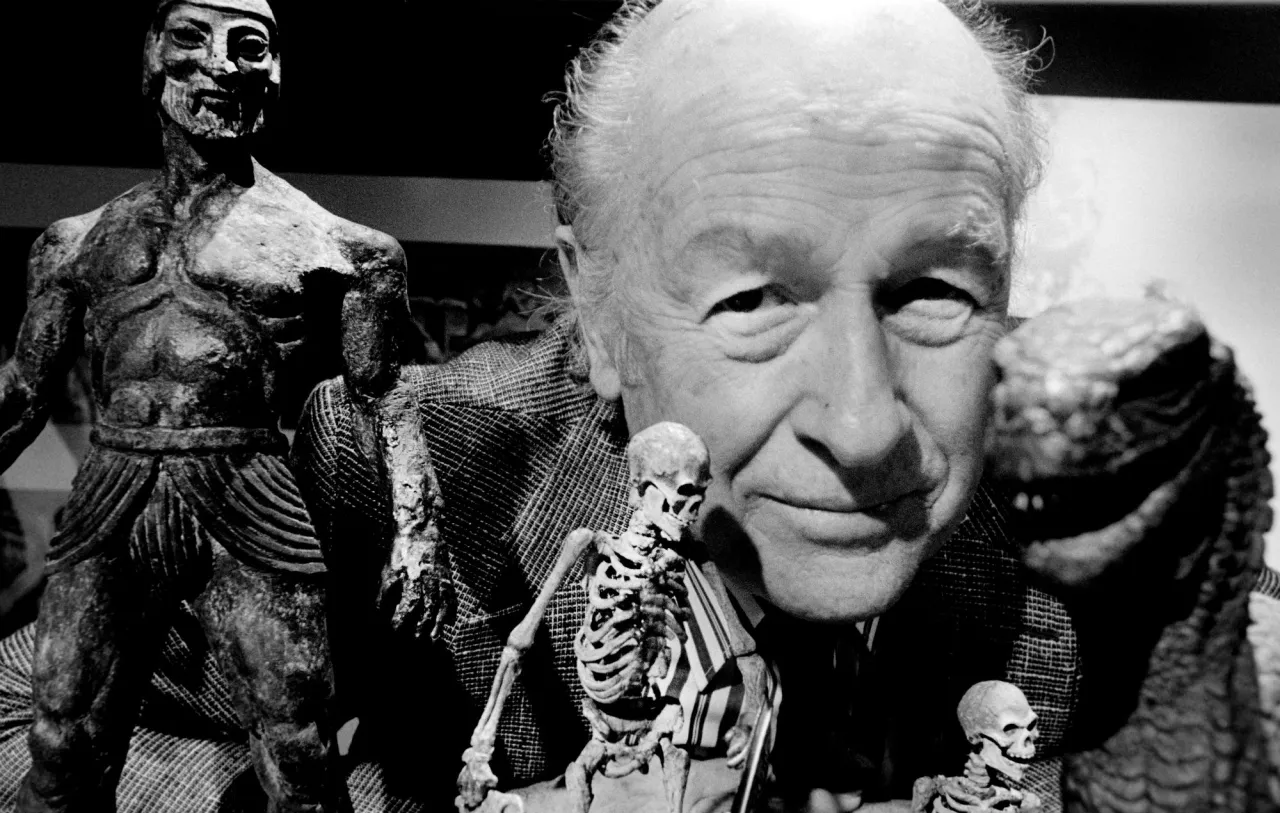

Few names inspire as much admiration among genre enthusiasts as Ray Harryhausen. When the golden age of creature features is mentioned, his unmistakable visual style comes instantly to mind. Behind countless unforgettable images—giants clashing with humans and mythic monsters battling heroes—stands the artistry of one visionary who redefined cinematic fantasy. His films are not just classic adventures; they are technical marvels that reshaped the very language of storytelling on screen.
Beginnings: from early inspirations to mighty joe young
Ray Harryhausen’s fascination with dinosaurs and ancient myths began after watching King Kong as a child. This sense of awe sparked a lifelong obsession with film techniques, especially those capable of animating impossible creatures. Throughout the 1940s, he honed his craft at home before embarking on a Hollywood career during an era hungry for spectacle and innovation.
The first major showcase of Harryhausen’s breakthrough approach to stop-motion animation was mighty joe young. Released in 1949, this story of a gentle giant gorilla remains beloved for its remarkably lifelike movements and expressive character work. Working alongside his mentor Willis O’Brien, Harryhausen’s contributions helped the film secure an Oscar for Visual Effects. For many viewers, this marked their introduction to his signature talent for memorable creature creations.
The atomic age awakens: iconic monsters invade cinema
The science fiction boom of the 1950s offered Ray Harryhausen the perfect stage. Audiences flocked to see larger-than-life monsters threaten American cities and distant coastlines. These spectacles relied heavily on Harryhausen’s meticulous stop-motion work, setting new standards for special effects and raising expectations across the industry.
What made the beast from 20,000 fathoms remarkable?
The beast from 20,000 fathoms burst onto screens in 1953, presenting a prehistoric reptile awakened by nuclear testing. The story captured the public’s imagination, thanks in large part to Harryhausen’s detailed animation, which blended seamlessly with live-action performances. This landmark film inspired a wave of imitators and paved the way for similar monster tales around the world.
The overwhelming success of this project established Harryhausen as the go-to name for films in need of fantastic creatures. Whether tackling futuristic terror or ancient legends, his ability to transform stop motion into believable spectacle astonished both fans and critics. Even today, the intricate destruction sequences and fluid movement of his monstrous villain remain highlights of the genre.
How did it came from beneath the sea change monster movies?
Shortly afterward, it came from beneath the sea introduced moviegoers to a menacing giant octopus attacking San Francisco. Once again, Harryhausen took a wildly imaginative premise and elevated it, infusing each tentacle with expressive personality. Budget constraints led to creative solutions—the octopus had only six arms instead of eight, a detail cleverly concealed on screen. Such ingenuity showcased how resourcefulness and vision could overcome practical limitations, earning widespread acclaim.
This period solidified Harryhausen’s reputation as a master of monster mayhem. Both films are now considered essential viewing for anyone compiling a complete list of must-see sci-fi classics. From collapsing city landmarks to intense underwater showdowns, these stories still stand as benchmarks of inventive filmmaking.
Sailing through myths: the sinbad films and beyond
From the late 1950s through the 1970s, Ray Harryhausen found rich inspiration in ancient legends and folklore. The celebrated sinbad films are particularly notable for their exotic settings, bold adventures, and dazzling array of magical beasts. With each new installment, audiences eagerly anticipated which extraordinary creature creation would grace the screen next.
What makes the seventh voyage of sinbad a pivotal moment?
The release of the seventh voyage of sinbad in 1958 marked a turning point in fantasy cinema. Harryhausen filled the frame with wonders—a hydra, cyclops, sword-fighting skeletons, and more. Each battle scene pushed the limits of what could be achieved on a modest budget, blending stop-motion animation with live action. Carefully layered sound effects and choreographed duels brought every confrontation to life, captivating audiences worldwide.
Further adventures followed, such as the golden voyage of sinbad and sinbad and the eye of the tiger. Each entry raised the bar with even more elaborate set pieces—animated statues, monstrous griffins—that have since influenced generations of filmmakers seeking to recapture that same sense of wonder. The adventure genre owes much to these milestones forged in myth and clay.
What distinguishes jason and the argonauts among ray harryhausen films?
Among all Ray Harryhausen films, few possess the enduring allure of jason and the argonauts. Released in 1963, this sweeping epic introduced the legendary skeleton army sequence, now hailed as a masterwork of stop-motion artistry. The film brims with iconic moments: Talos, the towering bronze giant, looming over sailors; the multi-headed Hydra writhing on Greek shores—all orchestrated with unmatched technical skill.
Each mythic encounter showcases the lasting appeal of Harryhausen’s touch. While plot and performance play their parts, it is the tangible presence and charisma of every handcrafted monster that leaves a lasting impression. Modern directors continue to cite these scenes as inspiration for contemporary fantasy blockbusters.
Clash of titans: the crowning achievement
By 1981, technological advances were transforming the landscape of genre cinema. Yet clash of the titans demonstrated the timeless magic of practical effects done right. Serving as Harryhausen’s final major film, it combined decades of expertise with some of the grandest set pieces of his career.
This retelling of Perseus’ quest features unforgettable highlights: Pegasus soaring above cliffs, Medusa slithering in her lair, colossal scorpions emerging from the sand. Every creature reflects years devoted to refining stop-motion animation. Far from being overshadowed by computer-generated imagery, these tactile monsters continue to fascinate viewers who appreciate genuine artistry in visual storytelling.
Exploring the filmography: a complete list of ray harryhausen’s works
To truly grasp Ray Harryhausen’s impact, one must consider his diverse catalogue. While his most famous titles receive the spotlight, several overlooked gems warrant attention. Below is a comprehensive selection featuring both essentials and lesser-known masterpieces:
- Mighty Joe Young (1949)
- The Beast from 20,000 Fathoms (1953)
- It Came from Beneath the Sea (1955)
- Earth vs. the Flying Saucers (1956)
- 20 Million Miles to Earth (1957)
- The 7th Voyage of Sinbad (1958)
- The Three Worlds of Gulliver (1960)
- Mysterious Island (1961)
- Jason and the Argonauts (1963)
- First Men in the Moon (1964)
- One Million Years B.C. (1966)
- The Valley of Gwangi (1969)
- The Golden Voyage of Sinbad (1973)
- Sinbad and the Eye of the Tiger (1977)
- Clash of the Titans (1981)
Observing the evolution of technique and ambition throughout this timeline reveals insights no single film can provide. Early works focus on city-smashing monsters, while later projects delve into historical epics and fairy-tale landscapes. Each phase introduces fresh innovations, always guided by Harryhausen’s distinctive vision, even as his team expanded.
While stop-motion animation is often linked with nostalgia today, Harryhausen’s portfolio stands as proof of its power to transport, surprise, and thrill. A complete list of his works serves not only as a checklist for collectors but also as inspiration for those eager to learn what hands-on creativity looks like in practice.
The enduring influence of harryhausen’s creature creations
Technologies may evolve, but there is a unique charm in watching carefully sculpted figures move frame by frame. Directors revisit Harryhausen’s methods not for novelty, but for the soulful imperfections that make each monster unforgettable. Studios continually reference his designs, aiming for the palpable sense of magic that digital effects rarely achieve.
Certain qualities set Ray Harryhausen’s legacy apart from typical genre fare. The emotional expressiveness given to mythical antagonists made them far more than mere obstacles. Additionally, the seamless integration of human actors and fantastical beasts created a template that has shaped multiple generations of filmmakers. Stories told through his lens carry a sense of wonder and suspense that modern blockbusters seldom replicate.
Rediscovering the art behind ray harryhausen films
Interest in ray harryhausen films experiences regular revivals, whether through retrospectives, museum exhibitions, or restored editions. Family audiences find something timeless in these adventures, while dedicated fans explore production notes and behind-the-scenes anecdotes with enthusiasm.
Beyond entertainment, Harryhausen’s legend endures because of efforts that celebrate traditional crafts. Workshops and documentaries help new viewers understand the dedication and vision required for stop-motion animation. This ongoing education secures Harryhausen’s place not only as a pioneer, but as a storyteller and artist whose imagination continues to fuel creativity around the globe.
